
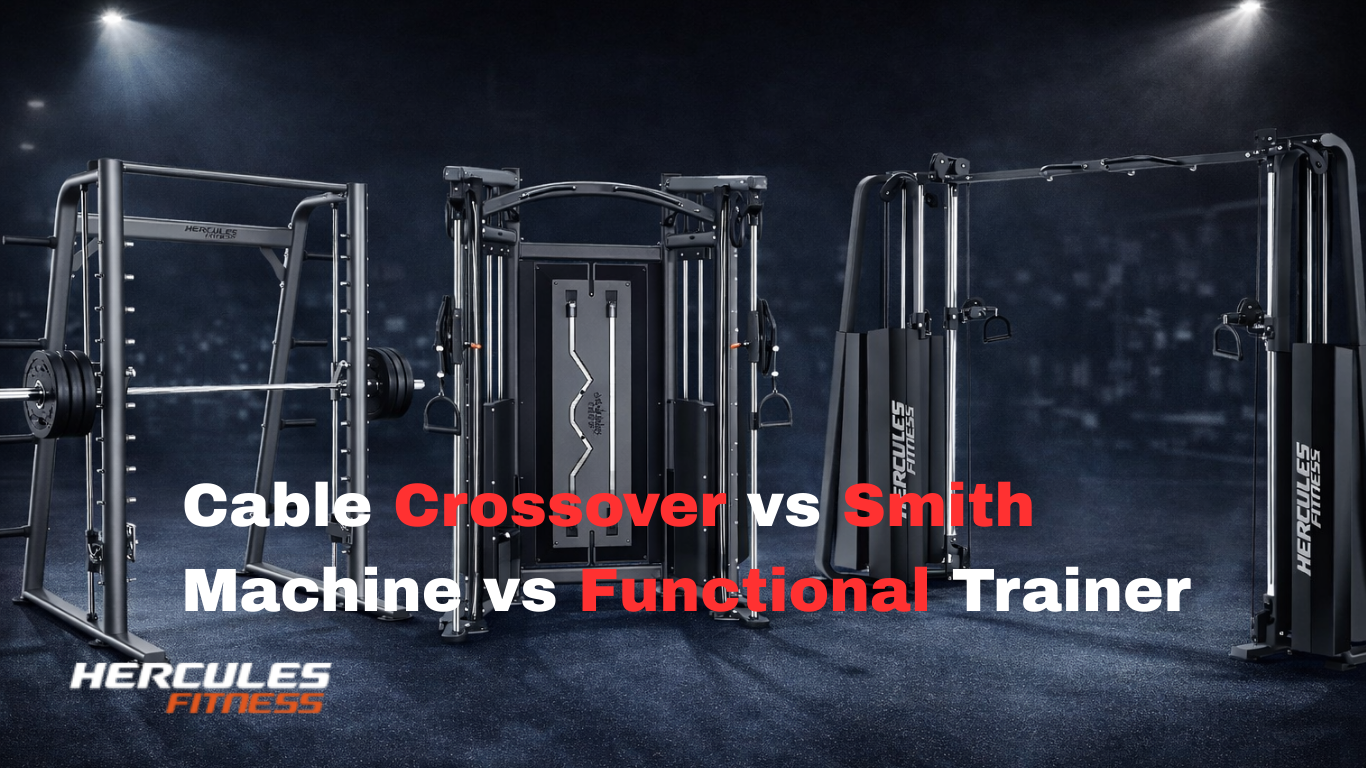
When it comes to strength training and muscle development, gym equipment plays a major role in determining workout effectiveness, safety, and versatility. Among the most commonly debated machines are the Cable Crossover, Smith Machine, and Functional Trainer. While all three are staples in modern gyms, each serves a different purpose and suits different training goals.
In this article, we’ll break down the differences, benefits, and ideal use cases of these machines to help you decide which one best fits your fitness needs.
Understanding the Cable Crossover Machine

The Cable Crossover machine is primarily designed for isolation and controlled resistance training. It features two adjustable pulleys placed on opposite sides, allowing users to perform movements that closely mimic natural muscle paths.
Key Benefits
- Excellent for muscle isolation, especially the chest, shoulders, arms, and core
- Constant tension throughout the movement, improving muscle activation
- Allows multiple angles of movement by adjusting the pulley height
Cable crossovers are particularly popular for chest exercises such as cable flyes, but they also support functional movements like woodchoppers, triceps pushdowns, and lateral raises.
Limitations
- Limited load capacity compared to free-weight machines
- Less suitable for heavy compound lifts
- Primarily focused on upper-body training
Cable crossover machines are ideal for bodybuilders, rehab-focused users, and anyone aiming to improve muscle definition and control rather than maximum strength.
The Smith Machine: Stability and Strength Combined
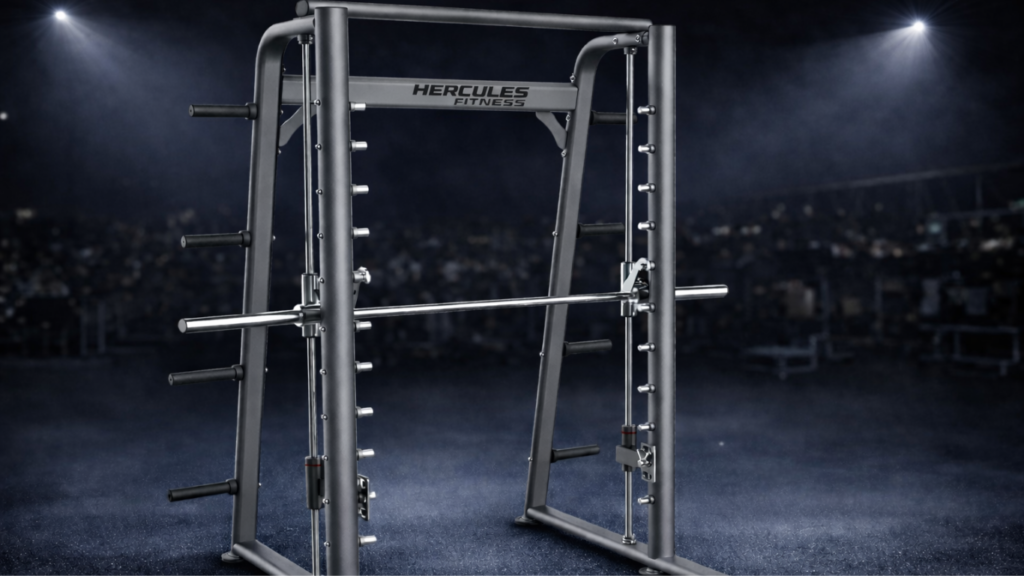
The Smith Machine is a guided barbell system that moves along a fixed vertical or slightly angled path. It’s often used as a safer alternative to free-weight barbell exercises.
Key Benefits
- Provides high stability, making it beginner-friendly
- Enables heavy lifting with reduced risk of balance-related injury
- Useful for compound exercises like squats, bench presses, and lunges
Because the bar path is fixed, users can focus purely on pushing or pulling weight without worrying about stabilization, making it popular in commercial gyms.
Limitations
- A fixed movement path may limit natural biomechanics
- Reduced activation of stabilizer muscles
- Less functional compared to free weights or cable systems
The Smith Machine is best suited for beginners, solo lifters, and those recovering from injuries who still want to train with heavier loads safely.
Functional Trainer: The Most Versatile Option
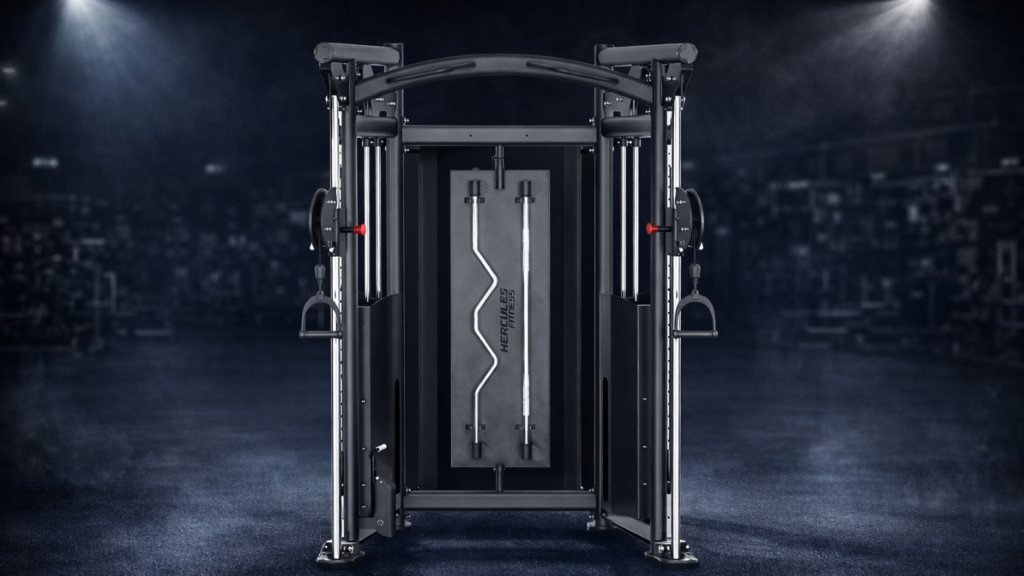
The Functional Trainer is often considered the evolution of the cable crossover. While similar in appearance, it offers a wider range of movement, smoother pulley systems, and more exercise possibilities.
Key Benefits
- Supports full-body functional movements
- Allows training in multiple planes of motion
- Ideal for strength, mobility, balance, and athletic performance
- Suitable for beginners, athletes, and rehabilitation programs
Functional trainers enable exercises like squats with resistance, rotational core movements, single-arm presses, and sport-specific training. This makes them highly effective for real-life strength development.
Limitations
- More expensive than traditional machines
- Requires proper programming to maximize benefits
- May not support extremely heavy loads like Smith Machines
Because of their adaptability, functional trainers are commonly found in high-end gyms, physiotherapy clinics, and performance training centers.
Cable Crossover vs Smith vs Functional Trainer: A Quick Comparison
| Feature | Cable Crossover | Smith Machine | Functional Trainer |
| Primary Focus | Isolation & aesthetics | Strength & safety | Functional movement |
| Movement Freedom | Moderate | Very limited | High |
| Stabilizer Engagement | Medium | Low | High |
| Best For | Bodybuilding | Heavy lifting | Athletic & rehab training |
Which Machine Should You Choose?
The right machine depends entirely on your fitness goals:
- Choose a Cable Crossover if your priority is muscle shaping, isolation, and constant tension workouts.
- Choose a Smith Machine if you want to lift heavier weights safely, especially when training alone.
- Choose a Functional Trainer if you want versatility, functional strength, and long-term athletic development.
For gym owners or fitness studios, investing in a functional trainer often yields the best return on investment due to its broad user appeal and variety of exercises.
Final Thoughts
There is no single “best” machine—only the best machine for your goals. Cable crossovers excel at isolation, Smith machines dominate in controlled strength training, and functional trainers lead in versatility and real-world movement patterns. Understanding these differences allows you to train smarter, reduce injury risk, and achieve better results over time.
Choosing the right equipment is not just about preference—it’s about purpose.
Frequently Asked Questions (FAQs)
1. What is the main difference between a cable crossover and a functional trainer?
The main difference is versatility. A cable crossover is designed mainly for isolation exercises like chest flyes and arm workouts. At the same time, a functional trainer allows full-body, multi-plane movements that improve functional strength, balance, and coordination.
2. Is a Smith machine better than a cable crossover for beginners?
Yes, the Smith machine is often better for beginners because it provides a guided bar path, improving stability and safety. Cable crossover machines require more control and are better suited for users who already understand proper form.
3. Which machine is best for chest workouts: cable crossover or Smith machine?
Cable crossover machines are better for chest isolation and muscle definition, while Smith machines are better for heavy compound chest exercises like bench presses. Many lifters use both for complete chest development.
4. Can a functional trainer replace a cable crossover machine?
Yes, a functional trainer can effectively replace a cable crossover because it offers similar cable movements along with many additional exercise options, including lower-body and rotational training.
5. Is the Smith machine safe for heavy lifting?
The Smith machine is considered safe for heavy lifting due to its guided motion and safety hooks. However, improper form or over-reliance on the fixed bar path may increase joint stress if not used correctly.
6. Which machine is best for full-body functional training?
The functional trainer is the best option for full-body functional training because it supports natural movement patterns, unilateral exercises, and multiple planes of motion, making it ideal for athletic and real-life strength development.
7. Are cable machines better than Smith machines for muscle activation?
Cable machines generally provide better muscle activation because they maintain constant tension and engage stabilizer muscles. Smith machines reduce stabilizer involvement due to their fixed movement path.
8. Which machine is best for a commercial gym or fitness studio?
A functional trainer is usually the best choice for commercial gyms because it appeals to a wide range of users, supports many workout styles, and offers excellent space efficiency compared to multiple single-purpose machines.

