
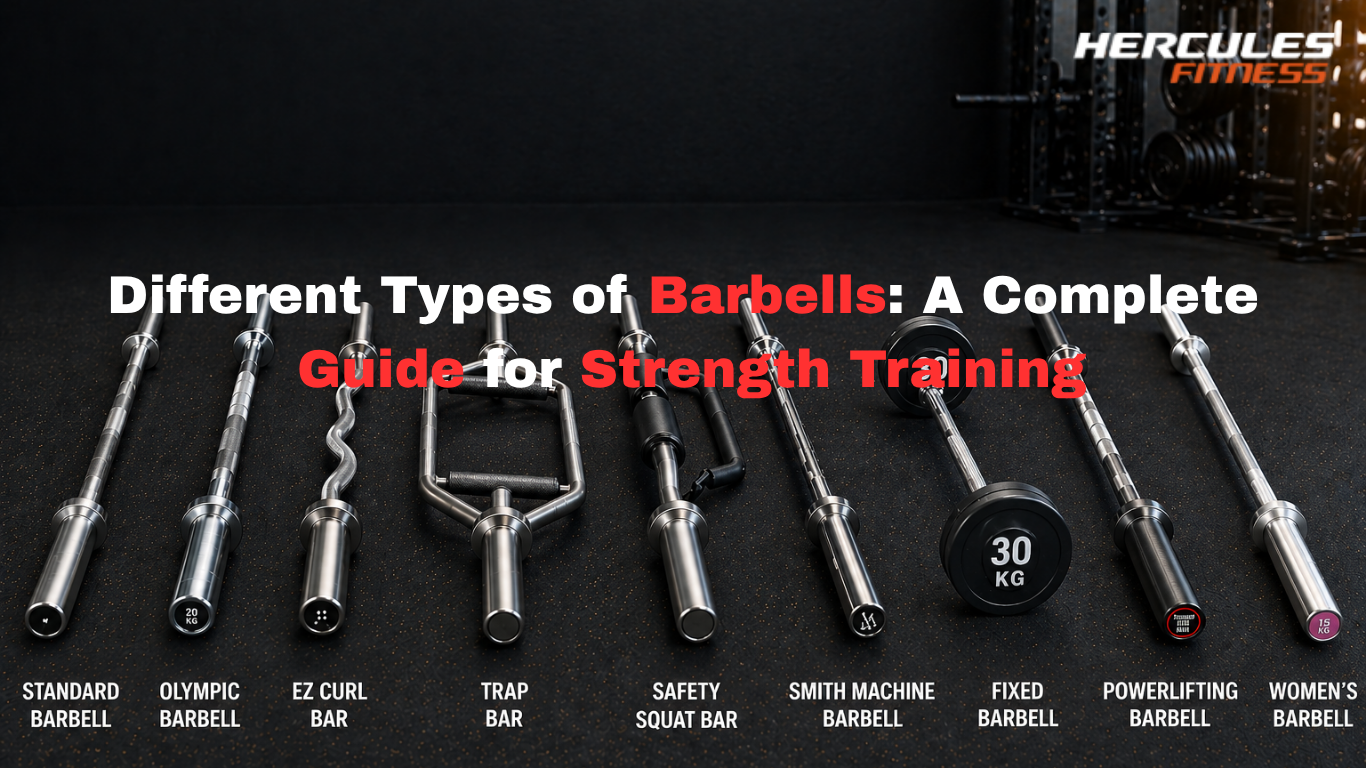
Barbells are one of the most essential tools in strength training and are widely used in gyms, home workouts, and professional sports training. Whether your goal is to build muscle, increase strength, or improve overall fitness, barbells provide a versatile and effective way to train. However, not all barbells are the same. Understanding the different types of barbells can help you choose the right one for your training needs and maximize your results.
What is a Barbell?
A barbell is a long metal bar designed to hold weight plates on either end. It is commonly used for exercises such as squats, deadlifts, bench presses, and overhead presses. Barbells allow you to lift heavier weights compared to dumbbells, making them ideal for strength and muscle development.
1. Standard Barbell
The standard barbell is typically shorter and lighter than other types. It usually measures around 5 to 6 feet in length and is designed for use with standard weight plates.
This type of barbell is commonly found in home gyms and is suitable for beginners. While it is affordable and easy to handle, it may not support very heavy loads, making it less ideal for advanced lifters.
2. Olympic Barbell
The Olympic barbell is the most popular type used in commercial gyms. It is typically 7 feet long and weighs 20 kg (44 pounds) for men and 15 kg (33 pounds) for women.
Olympic barbells are designed for heavy lifting and are used in exercises like squats, deadlifts, and Olympic lifts such as the clean and jerk or snatch. They feature rotating sleeves, which reduce strain on the wrists during dynamic movements. This barbell is ideal for serious lifters and athletes.
3. EZ Curl Bar
The EZ curl bar is a shorter bar with a curved or zigzag shape. This design allows for a more natural grip, reducing strain on the wrists and elbows.
It is commonly used for exercises targeting the arms, such as bicep curls and tricep extensions. Beginners and those with joint discomfort often prefer this bar for its comfort and ease of use.
4. Trap Bar (Hex Bar)
The trap bar, also known as the hex bar, has a unique hexagonal shape that allows you to stand inside the bar while lifting.
This design helps maintain a more upright posture, reducing stress on the lower back. It is especially useful for deadlifts and shrugs. The trap bar is a great option for beginners and individuals looking to improve lifting form safely.
5. Safety Squat Bar
The safety squat bar is designed with padded shoulder supports and forward-facing handles. This allows you to perform squats without placing strain on your shoulders.
It is particularly beneficial for people with limited shoulder mobility or injuries. The design also helps maintain an upright torso, making it easier to perform squats with proper form.
6. Smith Machine Barbell
The Smith machine barbell is fixed within a guided system, allowing it to move only in a vertical or slightly angled path.
This type of barbell is ideal for beginners because it provides stability and reduces the risk of injury. It is commonly used for squats, bench presses, and lunges. However, it does not engage stabilizing muscles as much as free-weight barbells.
7. Fixed Barbells
Fixed barbells come with pre-attached weights and cannot be adjusted. They are often found in gyms and are arranged in racks with different weight options.
These barbells are convenient for quick workouts and are commonly used for exercises like curls and presses. However, they can take up more space and limit flexibility in weight selection.
8. Powerlifting Barbell
Powerlifting barbells are specifically designed for heavy compound lifts such as squats, bench presses, and deadlifts.
They are thicker, more rigid, and have a higher weight capacity compared to standard barbells. The knurling (grip pattern) is also more aggressive, providing a stronger grip during heavy lifts. This barbell is ideal for advanced lifters and competitive athletes.
9. Women’s Barbell
Women’s barbells are slightly shorter, lighter, and have a smaller diameter compared to standard Olympic barbells.
They are designed to accommodate smaller hand sizes and are commonly used in both gyms and competitions. Despite being lighter, they are still strong and suitable for heavy lifting.
How to Choose the Right Barbell
Choosing the right barbell depends on your fitness goals, experience level, and available space.
- Beginners: Standard barbells or EZ curl bars are great starting points.
- Intermediate users: Olympic barbells offer versatility and durability.
- Advanced lifters: Powerlifting or specialized bars provide better performance for heavy lifts.
- Home gyms: Consider space and budget when selecting a barbell.
Conclusion
Barbells are a cornerstone of strength training and offer a wide range of benefits for all fitness levels. From standard barbells and Olympic barbells to specialized options like trap bars and safety squat bars, each type serves a unique purpose.
By understanding the different types of barbells, you can choose the right equipment for your workouts and train more effectively. Whether you’re aiming to build muscle, increase strength, or improve overall fitness, the right barbell can make a significant difference in your progress.
1. What are the main types of barbells?
The main types of barbells include standard barbells, Olympic barbells, EZ curl bars, trap (hex) bars, safety squat bars, Smith machine barbells, fixed barbells, powerlifting barbells, and women’s barbells.
2. Which barbell is best for beginners?
Beginners can start with a standard barbell or an EZ curl bar, as they are easier to handle and help in learning proper form before progressing to heavier lifts.
3. What is the difference between a standard barbell and an Olympic barbell?
A standard barbell is lighter and shorter, designed for basic workouts, while an Olympic barbell is heavier, more durable, and built for high-intensity and heavy lifting.
4. What is a trap bar used for?
A trap bar (hex bar) is mainly used for deadlifts and shrugs. It helps maintain better posture and reduces stress on the lower back, making it safer for many users.
5. Is the EZ curl bar better for arm workouts?
Yes, the EZ curl bar is designed to reduce wrist and elbow strain, making it more comfortable and effective for exercises like bicep curls and triceps extensions.
6. Can I build muscle using only barbells?
Yes, barbells are highly effective for building muscle. Compound exercises like squats, deadlifts, and bench presses can help develop full-body strength and size.
7. What is a powerlifting barbell?
A powerlifting barbell is a heavy-duty bar designed for maximum strength lifts. It has a higher weight capacity and better grip for exercises like squats, bench press, and deadlifts.
8. How do I choose the right barbell for my home gym?
Consider your fitness goals, experience level, budget, and available space. For most home users, an Olympic barbell or adjustable setup offers the best balance of versatility and performance.

