
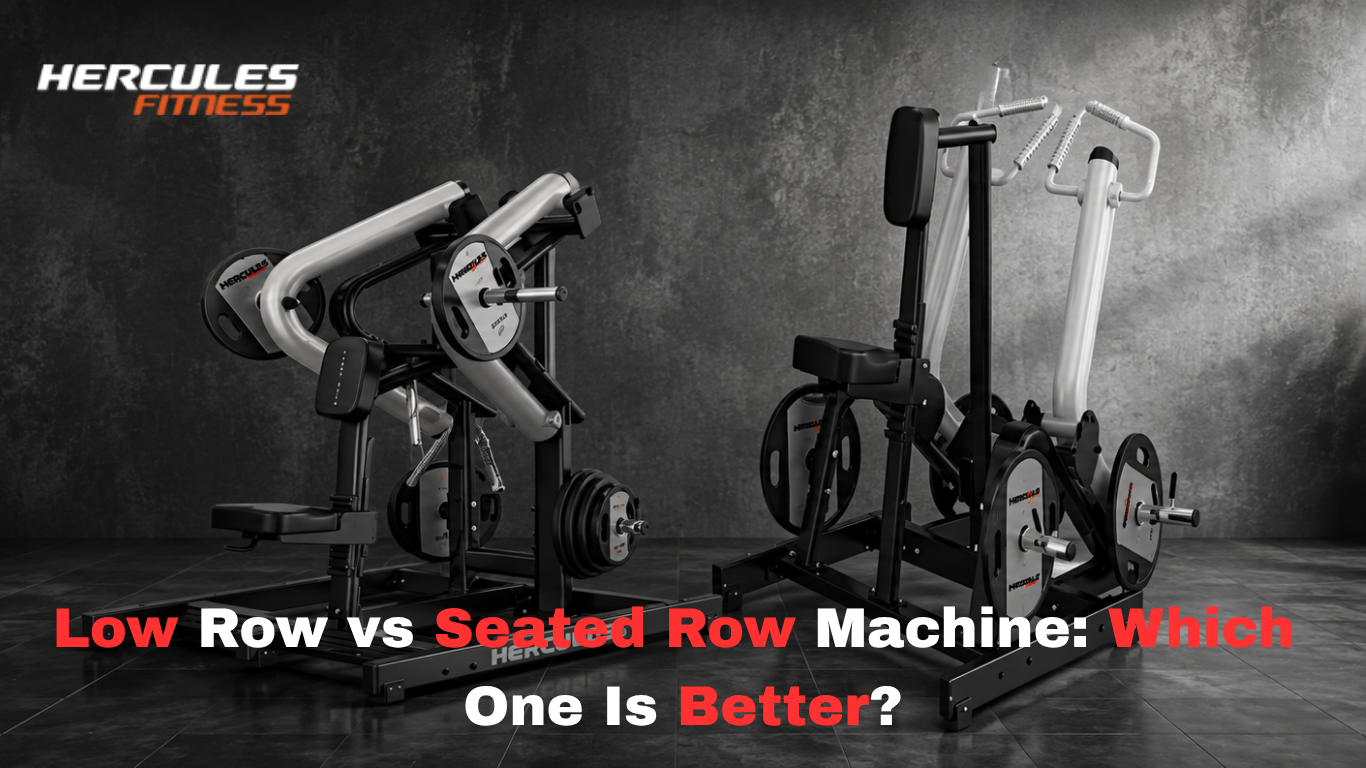
When it comes to building a stronger, wider, and thicker back, rowing exercises are among the most effective movements in any strength training program. Two of the most popular machines for back workouts are the Low Row Machine and the Seated Row Machine. While they may appear similar, each machine offers unique advantages depending on your fitness goals.
In this guide, we’ll compare the Low Row vs Seated Row Machine, including their benefits, muscles worked, key differences, and which one is the better choice for beginners, athletes, and bodybuilders.
What Is a Low Row Machine?
A Low Row Machine is a strength-training machine that simulates a horizontal rowing movement. Most commercial gyms offer either plate-loaded or selectorized versions. The user pulls the handles toward the lower abdomen while keeping the chest stable, allowing for a powerful contraction of the back muscles.
Muscles Worked
- Latissimus dorsi (Lats)
- Rhomboids
- Middle trapezius
- Rear deltoids
- Biceps
- Forearms
Benefits of the Low Row Machine
- Builds back thickness and overall pulling strength.
- Supports progressive overload with heavier weights.
- Encourages a natural rowing movement.
- Improves athletic performance and functional strength.
- Places less stress on the lower back than bent-over rows.
What Is a Seated Row Machine?
The Seated Row Machine uses a cable and weight stack to provide smooth, controlled resistance throughout the exercise. It is widely used in commercial gyms because it is beginner-friendly and suitable for users of all fitness levels.
Muscles Worked
- Latissimus dorsi
- Rhomboids
- Trapezius
- Rear deltoids
- Biceps
- Core stabilizers
Benefits of the Seated Row Machine
- Easy to learn and use.
- Provides constant muscle tension.
- Improves posture and upper-body strength.
- Suitable for rehabilitation and beginners.
- Helps maintain proper exercise form.
Low Row vs Seated Row Machine: Key Differences
| Feature | Low Row Machine | Seated Row Machine |
| Resistance | Plate-loaded or selectorized | Cable with weight stack |
| Movement | Natural rowing path | Fixed cable movement |
| Best For | Strength and muscle mass | Muscle endurance and beginners |
| Learning Curve | Moderate | Easy |
| Progressive Overload | Excellent | Good |
| Stability | Moderate | High |
| Muscle Isolation | High | High |
1. Muscle Activation
Both machines effectively target the upper and middle back. However, the Low Row Machine typically allows heavier loading, making it ideal for building strength and back thickness.
The Seated Row Machine provides constant cable tension, making it excellent for muscle hypertrophy and controlled contractions.
Winner: Tie
2. Strength Development
For lifters aiming to increase pulling power, the Low Row Machine is the better option because it supports heavier loads and progressive overload.
The Seated Row Machine focuses more on controlled movement than maximum strength.
Winner: Low Row Machine
3. Ease of Use
The Seated Row Machine is easier to learn and safer for beginners due to its guided movement.
The Low Row Machine may require slightly better technique, especially when lifting heavy weights.
Winner: Seated Row Machine
4. Safety
Both machines are considered safe alternatives to free-weight rowing exercises.
The guided cable path of the Seated Row Machine reduces the chances of poor technique, making it a preferred choice for novice lifters.
Winner: Seated Row Machine
5. Muscle Growth
If your goal is to maximize muscle size, both machines can be highly effective.
The Low Row Machine excels in building dense back muscles through heavier resistance, while the Seated Row Machine provides consistent tension that promotes hypertrophy.
For the best results, include both in your training program.
Which Machine Should You Choose?
Choose the Low Row Machine if you:
- Want to increase back strength.
- Prefer heavier plate-loaded exercises.
- Train for sports performance.
- Focus on progressive overload.
- Want to build a thicker back.
Choose the Seated Row Machine if you:
- Are a beginner.
- Prefer smooth, controlled movements.
- Want better muscle isolation.
- Are recovering from injury.
- Focus on higher-repetition training.
Can You Use Both Machines?
Yes. Combining both machines can create a well-rounded back workout.
A simple approach is to:
- Perform Low Rows early in your workout for heavier compound sets.
- Finish with Seated Rows using lighter weights and higher repetitions to maximize muscle activation.
Final Verdict
The choice between the Low Row Machine and the Seated Row Machine depends on your training objectives.
If your priority is strength, progressive overload, and building a thicker back, the Low Row Machine is the better option.
If you prefer controlled movement, ease of use, and consistent muscle tension, the Seated Row Machine is an excellent choice.
For commercial gyms, fitness centres, and home gym owners, offering both machines provides users with greater versatility and accommodates all fitness levels.
Frequently Asked Questions (FAQs)
1. What is the difference between a Low Row Machine and a Seated Row Machine?
The primary difference lies in the resistance system and movement pattern. A Low Row Machine often uses plate-loaded resistance and allows for heavier lifting, making it ideal for building strength and back thickness. A Seated Row Machine typically uses a cable and weight stack, providing smooth, controlled resistance that’s better suited for beginners and muscle endurance.
2. Which machine is better for building back muscles?
Both machines effectively target the back muscles, including the lats, rhomboids, and trapezius. However, the Low Row Machine is generally better for increasing back thickness and strength, while the Seated Row Machine is excellent for muscle isolation and consistent muscle tension.
3. Is the Low Row Machine suitable for beginners?
Yes. Beginners can safely use the Low Row Machine by starting with lighter weights and focusing on proper form. However, many beginners find the Seated Row Machine easier because of its guided movement and adjustable weight stack.
4. Which muscles do the Low Row and Seated Row Machines work?
Both machines primarily target the latissimus dorsi (lats), rhomboids, trapezius, rear deltoids, biceps, and forearms. They also engage the core muscles to help stabilize the body during the rowing movement.
5. Can I include both the Low Row Machine and Seated Row Machine in the same workout?
Absolutely. Using both machines in the same workout can help maximize muscle development. Start with the Low Row Machine for heavier strength-focused sets, then finish with the Seated Row Machine for higher repetitions and greater muscle activation.
6. Which row machine is better for improving posture?
Both machines help strengthen the upper and middle back, which plays a key role in maintaining proper posture. Regular use of either machine can improve shoulder alignment, reduce slouching, and enhance overall upper-body stability.
7. How often should I use a row machine for back training?
Most fitness professionals recommend training your back 1–2 times per week, allowing at least 48 hours of recovery between sessions. Performing 3–4 sets of 8–15 repetitions on a row machine is effective for improving strength and muscle growth.
8. Is a Low Row Machine better than free-weight rows?
The Low Row Machine offers greater stability and reduces stress on the lower back, making it a safer option for many users. Free-weight rows, however, require more balance and activate additional stabilizing muscles. Including both exercises in your routine can provide the best overall results.

