
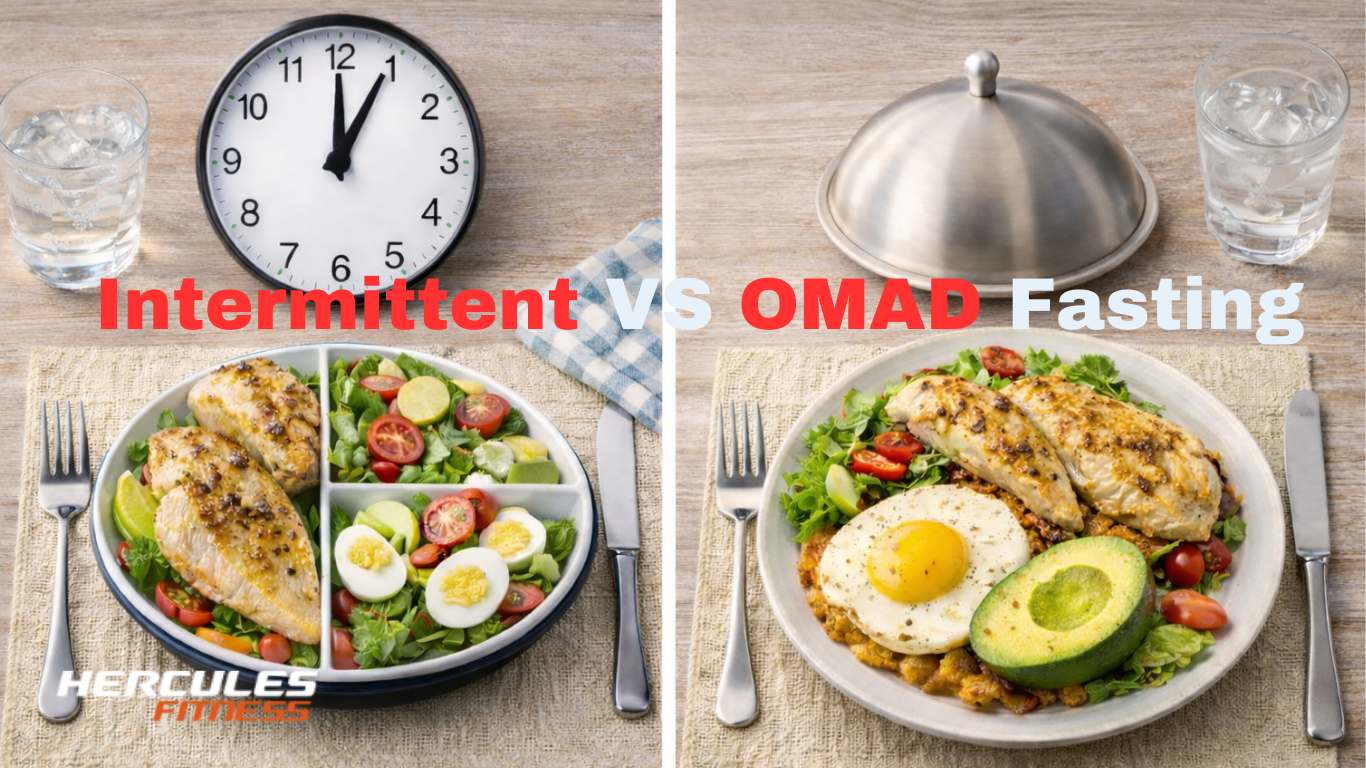
Fasting diets have become one of the most searched nutrition trends worldwide, especially among people aiming for weight loss, fat loss, and improved metabolic health. Two popular approaches dominate the conversation: Intermittent Fasting (IF) and OMAD (One Meal a Day).
Although both methods focus on limiting eating time rather than strictly counting calories, they differ greatly in intensity, sustainability, and nutritional impact. This guide explains intermittent fasting vs OMAD in simple terms, including their pros and cons, and which option may work best for your goals.
What Is Intermittent Fasting?
Intermittent fasting is an eating pattern where you alternate between fasting periods and eating windows. The most common version is the 16:8 method, meaning you fast for 16 hours and eat within an 8-hour window. Other variations include 14:10 or 18:6 schedules.
Instead of restricting specific foods, intermittent fasting focuses on when you eat. Many people naturally skip breakfast and consume lunch and dinner within their eating window.
Benefits of Intermittent Fasting
1. Sustainable for Long-Term Weight Loss
Intermittent fasting is easier to maintain because you still eat two or three meals daily. This makes it suitable for beginners and long-term lifestyle changes.
2. Natural Calorie Reduction
A shorter eating window often leads to reduced calorie intake without strict dieting, supporting gradual fat loss.
3. Improved Insulin Sensitivity
Fasting periods allow insulin levels to decrease, helping the body access stored fat more efficiently for energy.
4. Better Energy Regulation
After adaptation, many people experience fewer sugar crashes and improved mental focus during the day.
5. Supports Muscle Maintenance
Since multiple meals are allowed, it is easier to consume enough protein, which helps preserve muscle mass during fat loss.
Drawbacks of Intermittent Fasting
- Initial hunger and irritability during adaptation
- Possible overeating during eating windows
- May not suit individuals with irregular work shifts or high stress levels
What Is OMAD (One Meal a Day)?
OMAD, or One Meal a Day, is an extreme form of intermittent fasting where you eat all daily calories in a single meal, typically within one hour. This results in approximately 23 hours of fasting each day.
OMAD appeals to people seeking rapid fat loss or a very simple eating routine with minimal meal planning.
Benefits of OMAD
1. Strong Calorie Control
Eating once daily naturally limits opportunities to overeat, making calorie management easier for some individuals.
2. Faster Fat Loss Potential
Long fasting periods may increase fat utilization, particularly when combined with balanced nutrition.
3. Simplicity and Time Efficiency
OMAD eliminates the need for frequent meal preparation and reduces decision fatigue around food.
4. Increased Dietary Discipline
Many followers report improved awareness of true hunger versus emotional eating.
Drawbacks of OMAD
- Difficult to meet protein and nutrient requirements in one meal
- Reduced workout performance or low energy for active individuals
- Digestive discomfort from very large meals
- Social challenges due to restricted eating times
- Not beginner-friendly
Intermittent Fasting vs OMAD: Key Differences
| Factor | Intermittent Fasting | OMAD |
| Eating Frequency | 2–3 meals daily | 1 meal daily |
| Difficulty Level | Moderate | High |
| Sustainability | High | Lower for most people |
| Nutritional Balance | Easier to maintain | More challenging |
| Best For | Beginners & active individuals | Experienced fasters |
The biggest difference between intermittent fasting and OMAD is intensity. Intermittent fasting provides structure while maintaining flexibility, whereas OMAD requires strict discipline and careful meal planning.
Which Is Better for Weight Loss?
Both intermittent fasting and OMAD can support weight loss because they help reduce calorie intake and improve metabolic efficiency. However, research and real-world experience suggest that consistency matters more than fasting length.
Choose intermittent fasting if you:
- Are new to fasting
- Exercise regularly
- Want sustainable fat loss
- Prefer flexible meal timing
Choose OMAD if you:
- Already have fasting experience
- Prefer eating one large meal
- Can plan nutrient-dense foods carefully
- Tolerate long fasting periods comfortably
For most people, intermittent fasting offers a better balance between results and sustainability.
Final Thoughts
When comparing intermittent fasting vs OMAD, there is no universal winner. The best fasting method is the one you can follow consistently while maintaining proper nutrition, energy levels, and overall health.
Rather than choosing the most extreme diet, focus on building sustainable habits. Balanced meals, adequate protein intake, quality sleep, and regular exercise will always have a greater impact than any single eating strategy.
Frequently Asked Questions (FAQs)
1. What is the main difference between intermittent fasting and OMAD?
The main difference lies in meal frequency and fasting duration. Intermittent fasting allows multiple meals within a specific eating window (such as 8 hours), while OMAD restricts food intake to one meal per day, resulting in a much longer fasting period of about 23 hours.
2. Which is better for beginners: intermittent fasting or OMAD?
Intermittent fasting is generally better for beginners because it is less restrictive and easier to adapt to. Starting with a 12–14-hour fasting window helps the body gradually adjust before attempting more advanced fasting methods like OMAD.
3. Can intermittent fasting and OMAD help with weight loss?
Yes, both methods can support weight loss by naturally reducing calorie intake and improving how the body uses stored fat for energy. However, results depend on overall food quality, calorie balance, and consistency rather than fasting alone.
4. Will I lose muscle while doing OMAD or intermittent fasting?
Muscle loss can occur if protein intake is too low or calorie intake is extremely restricted. Intermittent fasting makes it easier to consume enough protein across multiple meals, while OMAD requires careful meal planning to maintain muscle mass.
5. Is OMAD safe to follow every day?
OMAD can be safe for some healthy individuals when meals are nutritionally balanced, but it may not be suitable for everyone. People with medical conditions, high physical activity levels, or demanding jobs may find daily OMAD difficult to sustain long-term.
6. Can I exercise while practicing intermittent fasting or OMAD?
Yes, many people successfully exercise while fasting. Intermittent fasting usually supports workouts better because energy intake is spread across more meals. With OMAD, workout timing and proper nutrition become especially important to avoid fatigue and performance drops.
7. How long does it take to adjust to fasting?
Most people need one to two weeks to adapt to intermittent fasting. During this period, hunger, headaches, or low energy may occur. OMAD typically requires a longer adaptation period because of the extended fasting duration.
8. Which fasting method is more sustainable long term?
For most individuals, intermittent fasting is more sustainable because it allows flexibility, social eating, and easier nutrient intake. OMAD may work well for certain lifestyles, but many people find it challenging to maintain consistently over months or years.

