
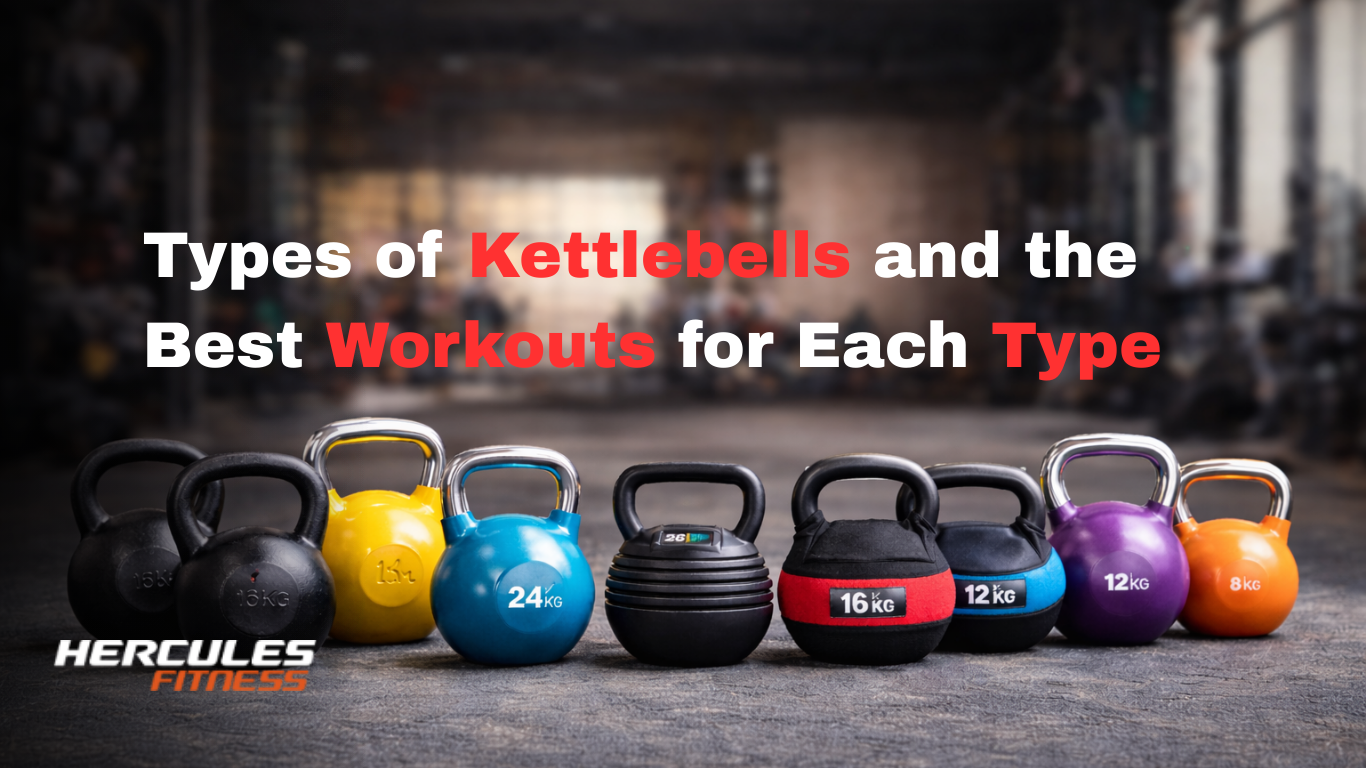
Kettlebells are among the most effective and versatile fitness tools for strength training, fat loss, and functional fitness. Whether you are a beginner or an advanced athlete, kettlebell workouts can improve muscle strength, cardiovascular endurance, mobility, and coordination. However, choosing the right type of kettlebell is just as important as performing the right exercises.
In this guide, we’ll explore the different types of kettlebells, their benefits, and the best kettlebell workouts for each type to help you maximize results.
1. Cast Iron Kettlebells
Cast iron kettlebells are the most common and widely used type of kettlebell in gyms and home workouts. They are made from a single solid piece of iron, with the handle and bell integrated into one unit.
Benefits of Cast Iron Kettlebells
- Durable and long-lasting
- Budget-friendly
- Ideal for traditional kettlebell exercises
- Suitable for beginners and advanced users
Best Workouts with Cast Iron Kettlebells
- Kettlebell Swings: Improves explosive power, burns fat, and strengthens glutes and hamstrings
- Goblet Squats: Builds leg strength and core stability
- Kettlebell Deadlifts: Excellent for learning hip hinge mechanics
- Russian Twists: Targets abs and obliques
Cast iron kettlebells are perfect for full-body kettlebell workouts and functional training routines.
2. Competition Kettlebells
Competition kettlebells are designed according to kettlebell sport standards. Unlike cast iron kettlebells, all competition kettlebells have the same size regardless of weight. They are usually made of steel and color-coded for easy identification.
Benefits of Competition Kettlebells
- Consistent size improves lifting technique
- Balanced weight distribution
- Smooth handles reduce hand fatigue
- Ideal for high-repetition training
Best Workouts with Competition Kettlebells
- Kettlebell Snatch: Builds power, endurance, and shoulder strength
- Clean and Jerk: Full-body strength and coordination
- Long Cycle Training: Improves cardiovascular fitness and muscular endurance
Competition kettlebells are best suited for advanced lifters and kettlebell sport athletes.
3. Adjustable Kettlebells
Adjustable kettlebells allow users to modify weight by adding or removing plates. These are excellent for home gyms where space and budget are limited.
Benefits of Adjustable Kettlebells
- Space-saving design
- Cost-effective solution
- Allows progressive overload
- Ideal for strength progression
Best Workouts with Adjustable Kettlebells
- Single-Arm Shoulder Press: Build shoulder and triceps strength
- Front Squats: Gradually increase load for leg development
- Renegade Rows: Strengthens back, arms, and core
While adjustable kettlebells may feel different during fast movements, they are excellent for controlled strength training.
4. Soft Kettlebells
Soft kettlebells are filled with sand or soft materials and covered with fabric or rubber. They are designed for safety and beginner-friendly workouts.
Benefits of Soft Kettlebells
- Reduced risk of injury
- Floor-friendly and quiet
- Ideal for home and apartment workouts
- Great for beginners and rehabilitation
Best Workouts with Soft Kettlebells
- Kettlebell Halos: Improve shoulder mobility
- Light Swings: Learn proper swing technique safely
- Farmer Carries: Improve grip strength and core stability
Soft kettlebells are ideal for learning movement patterns before progressing to heavier weights.
5. Hybrid or Competition-Style Fitness Kettlebells
These kettlebells combine features of both cast iron and competition kettlebells, offering uniform size with solid construction.
Best Workouts for Hybrid Kettlebells
- Turkish Get-Ups: Full-body strength, stability, and mobility
- Overhead Lunges: Improves balance and core control
- Windmills: Strengthens shoulders, hips, and obliques
Final Thoughts: Choosing the Right Kettlebell for Your Fitness Goals
Selecting the right kettlebell depends on your fitness level, workout style, and training goals. Beginners may start with cast iron or soft kettlebells, while advanced users may prefer competition kettlebells for endurance and performance training.
Kettlebell training offers unmatched benefits for strength, fat loss, and functional fitness. With the right kettlebell type and a structured workout plan, you can achieve impressive results using minimal equipment.
Frequently Asked Questions (FAQs)
1. What are the different types of kettlebells?
There are several types of kettlebells, including cast iron kettlebells, competition kettlebells, adjustable kettlebells, soft kettlebells, and hybrid kettlebells. Each type is designed for different training styles, experience levels, and fitness goals.
2. Which type of kettlebell is best for beginners?
Cast iron kettlebells and soft kettlebells are best for beginners. Cast iron kettlebells are durable and easy to use, while soft kettlebells are safer and help beginners learn proper movement patterns with a lower risk of injury.
3. What is the difference between cast iron and competition kettlebells?
The main difference is size and design. Cast iron kettlebells increase in size as weight increases, while competition kettlebells maintain the same size regardless of weight. Competition kettlebells are better for high-rep and sport-style training, whereas cast-iron kettlebells are ideal for general fitness.
4. Are adjustable kettlebells good for workouts?
Yes, adjustable kettlebells are excellent for home workouts. They allow you to increase or decrease weight as you progress, making them cost-effective and space-saving. However, they may feel less balanced during fast, dynamic movements like swings.
5. What are the best kettlebell exercises for full-body workouts?
Some of the best full-body kettlebell exercises include kettlebell swings, goblet squats, deadlifts, clean and press, Turkish get-ups, and snatches. These exercises target multiple muscle groups and improve strength, endurance, and mobility.
6. Can kettlebell workouts help with fat loss?
Yes, kettlebell workouts are highly effective for fat loss. Dynamic movements like swings, cleans, and snatches elevate heart rate, burn calories, and build lean muscle, making kettlebell training ideal for weight loss and metabolic conditioning.
7. How heavy should a kettlebell be for workouts?
The ideal kettlebell weight depends on your strength and experience. Beginners often start with 8–12 kg for women and 12–16 kg for men. As strength improves, heavier kettlebells can be used for progressive overload and advanced exercises.
8. How often should I do kettlebell workouts?
You can perform kettlebell workouts 3–5 times per week, depending on your fitness level and recovery. Beginners may start with 2–3 sessions per week, while experienced users can train more frequently with proper programming and rest.

