
Introduction
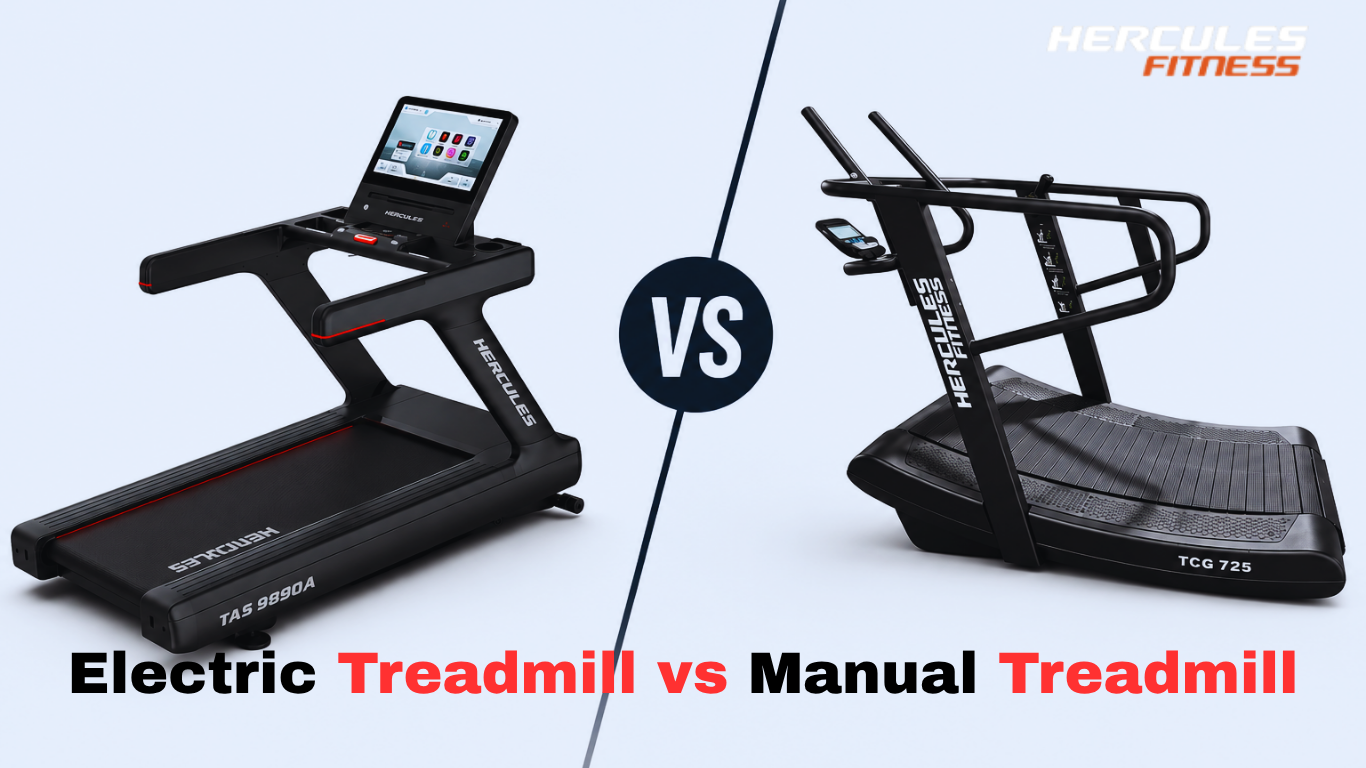
Choosing the right treadmill for your home gym can be challenging, especially when you have to decide between a manual treadmill and an electric treadmill. Both machines can help improve cardiovascular fitness, support weight management, and make indoor workouts more convenient. However, they operate differently and offer different features and workout experiences.
So, which one should you choose? The answer depends on your fitness goals, budget, available space, and preferred workout style. In this guide, we will explain the key differences between manual and electric treadmills to help you make an informed decision.
What Is a Manual Treadmill?
A manual treadmill, also known as a non-motorized treadmill, does not use an electric motor to move the belt. Instead, the belt moves when the user pushes it forward with their feet.
Because manual treadmills do not require electricity, they are generally simple to operate and can have lower running costs. Many models are also compact, making them suitable for homes with limited space.
One advantage of a manual treadmill is that it requires active involvement from the user. Every step helps move the belt, which can make walking feel more physically demanding than walking on some motorized treadmills.
However, basic flat-belt manual treadmills may not be ideal for people who want to run at high speeds. The belt can require more effort to move, and workout features may be limited depending on the model.
What Is an Electric Treadmill?
An electric treadmill, also called a motorized treadmill, uses an electric motor to move the running belt. Users can select their preferred speed using the treadmill’s control panel, allowing them to walk, jog, or run at a consistent pace.
Many modern electric treadmills include additional features such as adjustable incline, preset workout programs, digital displays, heart rate monitoring, and connectivity options.
The biggest benefit of an electric treadmill is convenience. You can change your speed during a workout without having to manually move the belt. This makes motorized treadmills a popular choice for people who want to perform different types of cardio workouts at home.
The main drawbacks are the higher purchase price, electricity requirements, and potentially greater maintenance needs due to the motor and electronic components.
Manual Treadmill vs Electric Treadmill: Key Differences
The primary difference between a manual treadmill and an electric treadmill is the way the belt moves.
| Feature | Manual Treadmill | Electric Treadmill |
| Belt movement | Powered by the user | Powered by an electric motor |
| Electricity | Not required | Required |
| Price | Usually more affordable | Usually more expensive |
| Speed control | User-controlled through movement | Adjustable using controls |
| Running experience | Can require more effort | Generally smoother |
| Incline | Often limited or manually adjusted | Often electronically adjustable |
| Workout programs | Usually limited | Often multiple programs available |
| Maintenance | Generally simpler | More components to maintain |
| Ideal for | Walking and basic cardio | Walking, jogging, running, and structured workouts |
Benefits of a Manual Treadmill
A manual treadmill can be a practical option for people who want a straightforward workout machine. Some of its potential advantages include:
- No electricity required: The belt operates through your movement.
- Lower operating cost: There is no electricity consumption during use.
- Simple design: Fewer electrical components can make the machine relatively straightforward.
- Compact options: Many models are suitable for smaller spaces.
- Affordable entry point: Manual treadmills can be less expensive than many motorized models.
However, users should consider the belt resistance and overall construction before purchasing because the workout experience can vary considerably between models.
Benefits of an Electric Treadmill
Electric treadmills offer several features that can make indoor workouts more convenient and versatile.
Adjustable Speed
You can select a specific walking, jogging, or running speed and maintain it throughout your workout.
Incline Training
Many motorized treadmills allow users to increase the incline, helping create a more challenging workout.
Workout Programs
Depending on the model, you may have access to preset programs designed for different fitness objectives.
Suitable for Running
Electric treadmills are generally more suitable for people who want to run regularly because the motor keeps the belt moving at a consistent speed.
Greater Convenience
The motorized belt means you do not have to generate the belt movement yourself, which can make longer workouts more comfortable.
Which Treadmill Is Better: Manual or Electric?
There is no single answer to which treadmill is better. Your choice should depend on your individual requirements.
A manual treadmill may be better for you if you primarily want to walk, prefer a simple machine, have a limited budget, or want to avoid electricity consumption.
An electric treadmill may be better for you if you want to jog or run, need adjustable speed and incline, or prefer programmed workouts and additional technology.
If you are purchasing a treadmill for a home gym, also consider the machine’s motor capacity, running belt size, maximum user weight, cushioning, warranty, noise level, and available space.
Manual Treadmill vs Electric Treadmill for Weight Loss
Both types of treadmills can support weight-loss goals when combined with appropriate nutrition and consistent physical activity. The most important factor is not simply whether the treadmill is manual or electric, but whether you can use it regularly and perform workouts appropriate to your fitness level.
A manual treadmill may provide a more active belt-moving experience, while an electric treadmill can make it easier to maintain a specific speed and perform longer or more structured workouts.
Final Verdict
When comparing a manual treadmill vs electric treadmill, both have their own advantages. Manual treadmills offer simplicity, user-powered movement, and potentially lower operating costs. Electric treadmills provide greater convenience, adjustable speed, incline options, and more features for structured workouts.
If your goal is basic walking and affordable home exercise, a manual treadmill can be a practical choice. If you want regular jogging, running, incline training, or advanced workout options, an electric treadmill may be the more versatile option.
Before making a purchase, compare the treadmill’s features with your fitness goals, budget, available space, and expected workout intensity. Choosing a treadmill that fits your needs will make it easier to stay consistent and get more value from your home workout equipment.
Frequently Asked Questions
1. Is a manual treadmill better than an electric treadmill?
Not necessarily. A manual treadmill can be suitable for walking and simple workouts, while an electric treadmill is generally more versatile for jogging, running, incline training, and structured workouts.
2. Can you lose weight using a manual treadmill?
Yes. Regular treadmill exercise can contribute to weight management when combined with appropriate nutrition and an overall active lifestyle.
3. Does a manual treadmill need electricity?
Most traditional manual treadmills do not need electricity to move the belt. However, some models may use batteries or electricity for features such as displays.
4. Which treadmill is better for running?
An electric treadmill is generally better suited to regular running because its motor maintains the selected belt speed.
5. Which treadmill is best for home use?
The best treadmill for home use depends on your available space, budget, fitness goals, workout frequency, and desired features.

