
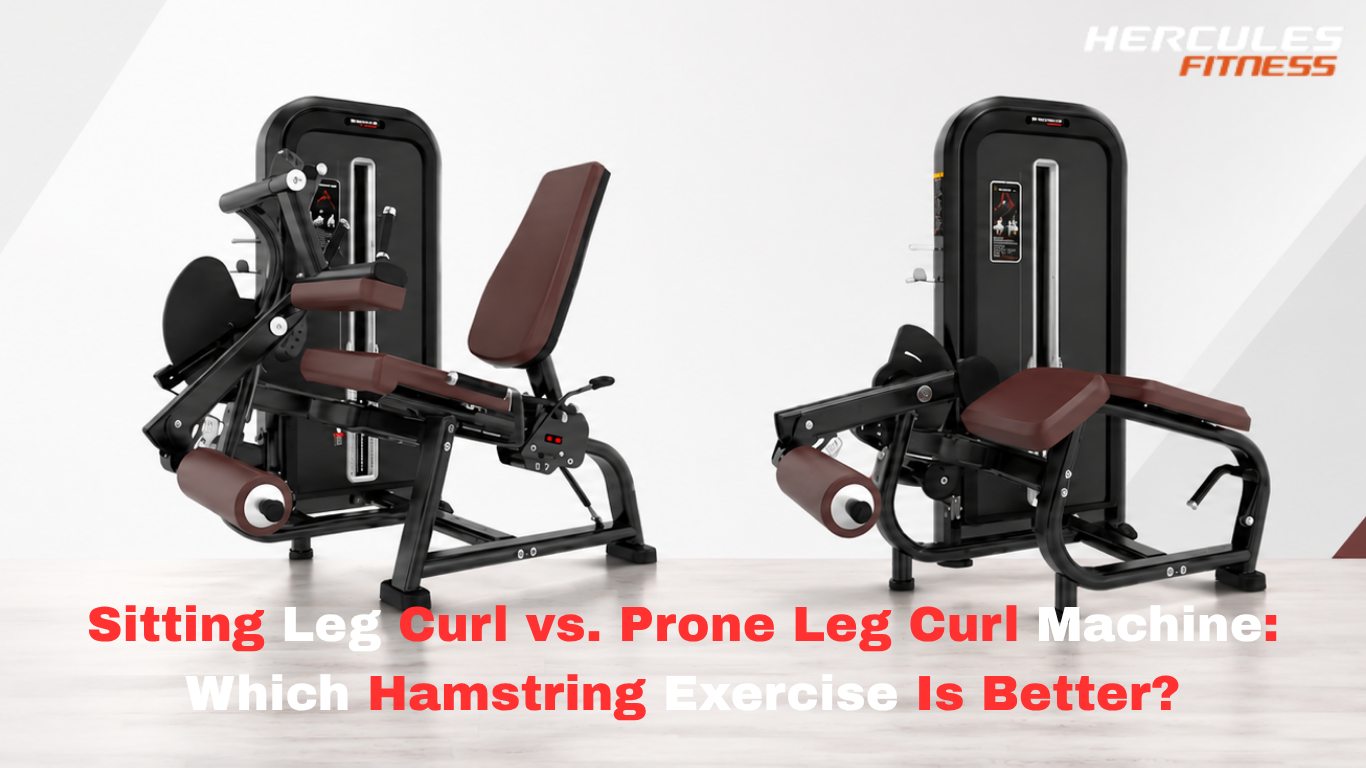
When it comes to building stronger, more defined legs, hamstring training is often overlooked. While squats and leg presses dominate most lower-body workouts, hamstring-focused exercises are essential for strength, balance, athletic performance, and injury prevention. Two of the most effective machines for targeting the hamstrings are the sitting leg curl and the prone leg curl machine.
Although both exercises work the same muscle group, they offer different benefits, training angles, and levels of comfort. Understanding how these machines work can help gym owners, fitness enthusiasts, and athletes choose the right equipment and optimize lower-body workouts.
What Is a Sitting Leg Curl Machine?
A sitting leg curl machine is designed to isolate the hamstring muscles while the user remains seated in an upright position. During the exercise, the legs start in an extended position, and the user curls the padded lever downward by contracting the hamstrings.
The seated position places the hamstrings under a deeper stretch compared to other curl variations. This increased stretch can improve muscle activation and contribute to better muscle growth over time.
Benefits of the Sitting Leg Curl
1. Better Hamstring Stretch
One of the biggest advantages of the seated leg curl is the extended hip position. Since the hips remain flexed while seated, the hamstrings experience a greater stretch, which may lead to improved muscle engagement.
2. Improved Comfort and Support
Many users find seated leg curl machines more comfortable because they reduce lower back strain. The upright posture and back support make the movement stable and beginner-friendly.
3. Enhanced Muscle Isolation
The sitting leg curl isolates the hamstrings effectively without heavily involving the glutes or lower back. This enables users to concentrate fully on hamstring contraction.
4. Suitable for Rehabilitation
Because of its controlled movement pattern, the seated leg curl is commonly used in rehabilitation and physiotherapy settings for hamstring recovery and strengthening.
What Is a Prone Leg Curl Machine?
The prone leg curl machine, also called the lying leg curl machine, requires the user to lie face down while curling the weight upward using the legs. This traditional machine has been a staple in commercial gyms for decades.
The prone position creates a different training angle and offers a more natural curling motion for many athletes.
Benefits of the Prone Leg Curl
1. Classic Hamstring Strength Builder
The prone leg curl has long been considered one of the best exercises for building hamstring strength and endurance. It effectively targets the back of the thighs and helps improve lower-body power.
2. Better Mind-Muscle Connection
Many lifters feel a stronger hamstring contraction during prone curls because of the body positioning. This can help improve focus and muscle activation.
3. Ideal for Athletic Training
Athletes often use prone leg curls to strengthen the posterior chain, improve sprint performance, and reduce the risk of hamstring injuries.
4. Simple and Effective Design
Prone leg curl machines are easy to use and widely available in most gyms. Their straightforward movement makes them suitable for users of all experience levels.
Sitting Leg Curl vs. Prone Leg Curl: Key Differences
While both machines target the hamstrings, there are important differences between them.
Body Position
- Sitting leg curl: Performed in a seated upright position
- Prone leg curl: Performed lying face down
Muscle Stretch
The seated variation provides a greater stretch to the hamstrings, while the prone version focuses more on peak contraction.
Comfort Level
Some users find seated curls more comfortable due to back support, while others prefer the natural movement of prone curls.
Training Goals
- Sitting leg curl: Better for muscle isolation, rehabilitation, and hypertrophy
- Prone leg curl: Better for strength development and athletic performance
Which Leg Curl Machine Is Better?
There is no single “best” machine because both offer unique advantages. The ideal option depends on individual fitness goals, body mechanics, and workout preferences.
For muscle growth and controlled isolation, the seated leg curl machine is often considered superior due to the deeper hamstring stretch. On the other hand, the prone leg curl machine remains highly effective for developing strength, athletic performance, and overall hamstring conditioning.
Many fitness professionals recommend incorporating both exercises into a workout routine for complete hamstring development.
Tips for Effective Hamstring Training
To maximize results while using either machine, keep these tips in mind:
- Use controlled movements instead of swinging the weight
- Focus on squeezing the hamstrings during each repetition
- Avoid lifting excessively heavy weights that compromise form
- Include proper warm-ups before leg workouts
- Train hamstrings consistently for balanced lower-body strength
Final Thoughts
Hamstring training plays a critical role in lower-body strength, athletic performance, and injury prevention. Both the sitting leg curl and the prone leg curl machines are excellent tools for isolating and strengthening the hamstrings.
The seated leg curl offers better stretch and muscle isolation, while the prone leg curl delivers powerful contractions and traditional strength-building benefits. Choosing the right machine depends on your fitness goals, comfort, and training style.
For gyms and fitness facilities, offering both machines can provide members with greater workout variety and more effective hamstring-development options.
Frequently Asked Questions (FAQs)
1. What is the difference between a sitting leg curl and a prone leg curl machine?
The sitting leg curl machine is performed in a seated position, while the prone leg curl machine is used while lying face down. Both target the hamstrings, but the seated variation provides a deeper muscle stretch, whereas the prone variation focuses more on peak contraction and strength.
2. Which is better for hamstring growth: seated leg curl or prone leg curl?
The seated leg curl is often considered better for hamstring hypertrophy because it places the muscles under a greater stretch. However, combining both seated and prone leg curls can provide complete hamstring development.
3. Are leg curl machines good for beginners?
Yes, both sitting and prone leg curl machines are beginner-friendly. They offer controlled movement patterns that help users isolate the hamstrings safely while reducing the risk of injury.
4. What muscles do leg curl machines work?
Leg curl machines primarily target the hamstrings, including the biceps femoris, semitendinosus, and semimembranosus muscles. They also engage the calf muscles slightly during movement.
5. Can seated leg curls help prevent injuries?
Yes, seated leg curls can strengthen the hamstrings and improve knee stability, which may help reduce the risk of hamstring strains and lower-body injuries during sports or workouts.
6. How many reps should I do on a leg curl machine?
For muscle growth, most fitness experts recommend 8–15 repetitions per set using controlled movement and proper form. The ideal weight depends on your fitness level and training goals.
7. Is the prone leg curl machine effective for athletes?
Yes, the prone leg curl machine is widely used in athletic training because it helps build hamstring strength, improves sprint performance, and supports overall lower-body power.
8. Should gyms have both seated and prone leg curl machines?
Yes, commercial gyms benefit from offering both machines because they provide different training angles and workout variety. Having both options allows users to target the hamstrings more effectively based on their goals and comfort.

